5 August 2026
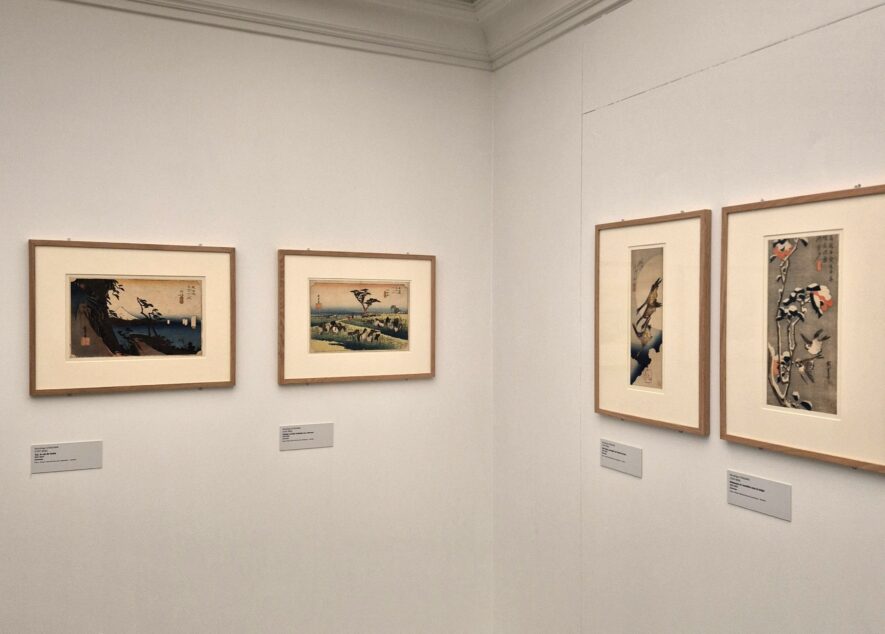
To mark the rotation of the works on display in the Parcours Belle Époque exhibition, the Villa du Temps retrouvé is hosting a new collection of Japanese prints on loan from the Guimet National Museum of Asian Arts.
These works bear witness to the unprecedented fascination that Japan inspired in Europe from the second half of the 19th century onwards. Following the country’s opening up to international trade in 1854, works of art and everyday objects began to pour into France, revealing a radically new aesthetic world to Western artists.
This phenomenon, now known as Japonism, had a profound impact on the arts of the Belle Époque. Woodblock prints by artists such as Utagawa Hiroshige (1797–1858) captivated viewers with their bold compositions, unexpected framing, blocks of colour and focus on scenes from everyday life. They went on to inspire painters, interior designers, poster artists and collectors. Marcel Proust was no exception to this craze: in In Search of Lost Time, he makes numerous references to Japanese art and its aesthetic. This fascination is particularly evident through the character of Odette de Crécy.
Through this loan exhibition, visitors can discover how Japanese art contributed to the emergence of artistic modernity, in dialogue with the works of Pissarro, Renoir, Degas, Rodin and many other artists.

 Accès
Accès Horaires
 Agenda